


Wed December 20 2006
 Free eReader e-books Dec 18-21 Free eReader e-books Dec 18-21
|
|
05:03 PM by Bob Russell in E-Book General | Deals and Resources (No...
No, no, no. Please don't spam me for that. I'm just kidding! There are so many fans of romance novels. I might tease here and there, but it's a force you can't deny. And romance readers include some of the nicest people, so we surely don't want to offend you folks! Thanks to PDA24/7 for finding the giveaway. |
|
[ 3 replies ] |
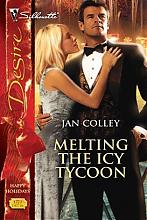 Yikes, we seem to have missed the first two days of the latest eReader giveaway, but it's still not too late to grab a couple of freebies. The
 |
What does it mean to be a bestselling book? Nothing, actually.
|
|
04:47 PM by Bob Russell in E-Book General | News
As Michael A. Bank points out on his Amazon blog, it's really just a general description these days. He says that he's "seen books that I know didn't sell 6,000 copies labeled bestselling." So the next time you see someone selling a bestseller, you might want to take a second look before you assume everyone likes it. |
|
[ 3 replies ] |
 When you hear the description "bestseller" for a book, or "bestselling" for an author, most people probably assume it means they were on one of the most famous book lists, like one from the New York Times. It brings visions of millions of copies sold. Right?... Wrong!
Tue December 19 2006
|
The Shepherd's Prayer:Free Christmas novel and audiobook
|
|
05:59 PM by Bob Russell in E-Book General | Deals and Resources (No...
The files are available here at his web site. There's also much more information about why he's giving it away for free, and how the book came about, but here's a quick statement about it: "This little novel has already positively influenced so many people's lives. We think it will help you experience Christmas like never before. You can read over 150 reviews sent to us, RM Barry Publications, by readers, in our Reviews section. We decided to make it really easy for potential readers to decide if they like The Shepherds' Prayer by offering it in three different free formats. There is the live stream of the first two chapters, the entire novel in .pdf, and the entire audioBook in MP3. Once you know you like the book, it's an easy decision to give The Shepherds' Prayer as gifts to your list." We applaud Mr. Barry for his approach and wish him success that will be incentive for more authors and publishers to follow his example. Now, if only he would provide an RTF version also! |
|
[ 0 replies ] |
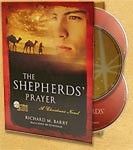 Author Richard Barry is one more writer who is willing to offer his (pdf) e-book for free. He goes one step further and offers the audio book for free also.
|
New Sharp color e-book reader with 4.3" screen
|
|
04:48 PM by Bob Russell in E-Book General | News
Some of the features: Some important qualities are not yet clear, such as what e-book/audiobook formats are supported, screen resolution, battery life, storage capacity, etc. We'll have to also determine whether or not it's available outside of Japan. So many of these gadgets are just a Japanese tease, because they can't be obtained except through importers who do some basic language conversions on these types of devices. From Engadget. |
|
[ 8 replies ] |
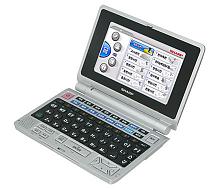 Sharp's new device, the RD-CX100, is a dictionary and e-book reader with a color screen. It appears to be an LCD display, and has the recognizable Sharp look to it.
Mon December 18 2006
|
How to build Linux 2.6 kernels
|
|
06:44 PM by Bob Russell in Archive | Handhelds and Smartphones
The author says that his goal in writing the book is to get more people interested in developing Linux kernels. He tries to demonstrate that if you know a little bit about what you are doing (not for the programming neophyte, of course), it's not too bad. Furthermore, even though the information is out there, it's not always easy to find it and put it all together. So if you have been wanting to build a Linux kernel, check it out. You know what they say - "You can never have too much Linux in the world." Okay, so nobody actually said that, but it does seem to be a common sentiment. Disclaimer: I know nothing about Linux kernels, so correction and clarification of this post is welcomed! |
|
[ 1 reply ] |
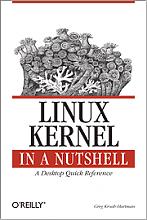 Have you had your eye on a favorite piece of hardware that you know would be so much better if it ran Linux? Or wanted to improve a Linux kernel that already exists? There's a new book just for you, called
 Sun December 17 2006
|
MobileRead Week in Review: 12/10 - 12/17
|
|
07:00 AM by Alexander Turcic in Miscellaneous | Week in Review Gosh we've talked a lot this week. Here's your weekly round up of MobileRead's events. E-book Devices, eREAD STAReBOOK E-book Devices, Future E-Book Devices E-book Devices, Sony Portable Reader E-books, Elsewhere on the Net E-books, News Mobile Devices, Handhelds and Smartphones |
Thu December 14 2006
|
Sony Reader: What do we want from searching? (poll)
|
|
12:52 PM by NatCh in E-Book Readers | Sony Reader
So, I'm starting this thread as a place to talk that over. I'm adding a poll so that we can get kind of a quantitative measure of what we're looking for. I'm giving the poll my best guesses as to what folks want. I know I'll miss something, but that's what the discussion is for. I'm also going to try the poll feature that allows selection of multiple answers, so we'll see how that works. I'd also like to get a feel for what's acceptable as far as how long the searching takes, clearly several minutes is probably too long, but is 20 seconds? 10? I'm used to the searching on the Palm eReader software, which is dependant on the length of the text it's searching, so I'd think that 10~20 seconds to search a long text is probably okay, with around 5 seconds being good for most searches, particularly just a "find the next/prev" kind of search. For me, the only searching I see myself using is a find next/previous instance of a given text string. But you lot have a very diverse collection of different needs and goals, so I'm interested in what the rest of you come up with. Have at it. |
|
[ 63 replies - poll! ] |
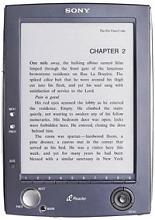 We've talked a lot about searching and the various reasons we want it, and what all would have to happen in the hardware/software to make it doable, but I don't recall any real discussion of what we want this notional search function to do.


|
Hitachi prototypes e-paper on Tokyo's trains
|
|
12:38 PM by Alexander Turcic in E-Book General | News
Unlike most e-paper applications we've seen so far, this one is not based on E Ink, but on Bridgestone's "electronic liquid powder" technology. Hitachi anticipates that, if everything goes according to plan, they will release the first commercial application of their new advertisement panels by March 2008. Related: Hitachi surprises with Albirey e-paper display, Electronic paper for shelf labels in Japanese stores [via Macworld] |
|
[ 2 replies ] |
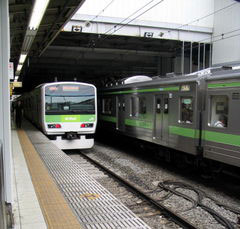 Starting as of today, the around 3.5 million passengers who ride on Tokyo's
  Week's Hot Topics
 Latest Polls
 Latest E-Books


 Latest Forum Activity
