


Wed April 18 2007
 Rumor: Sony Reader in Canada on June 1st? Rumor: Sony Reader in Canada on June 1st?
|
|
10:12 AM by igorsk in E-Book Readers | Sony Reader
Source: http://www.the-ebook.org/forum/viewt...?p=78413#78413 |
|
[ 19 replies ] |
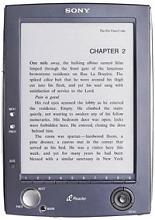 Reported by knigolub from the-ebook.org forums. Rough translation:
|
Intel Announces "Centrino Junior" Processor for UMPCs
|
|
09:14 AM by NatCh in E-Book Readers | Alternative Devices
ZDNet Australia is reporting that Intel has a new chip just out that's expressly designed for UMPCs. The CPUs, known as 'Stealey' CPUs, are "ultra-low voltage tweaks of the 90nm Pentium M processor with a 512Kb Level 2 cache." The article also discusses Intel's intent to re-position UMPCs as "mobile Internet Devices," and discussion of increasing emphasis on Linux as an OS for them. It doesn't seem to be suggesting that they're abandoning Windows, just adding more Linux exposure:
There's a bit more nitty-gritty in the article, for those who are interested.
|
|
[ 2 replies ] |

|
iPhone Subsidies?
|
|
08:55 AM by NatCh in E-Book Readers | Alternative Devices
PMP Today is reporting that AT&T (Cingular) may be offering iPhones with a subsidy for new (maybe renewed?) contracts:
The article further comments that part of the monthly fees may go straight to Apple as well, and that analysts are predicting a revenue jump of something like $1.3 billion ... um, in the next year, I guess, they don't really say.
|
|
[ 1 reply ] |

Tue April 17 2007
|
emelFM2 Iliad Release (File Manager)
|
|
05:38 PM by Adam B. in More E-Book Readers | iRex
A word of caution. Deleting files with the "Trash" icon will move them to /home/root/.local/Trash/Files. If you delete too large of a file from the memory card, it is possible to fill up the internal file system. I recommend that you do not use the trash function until I can sort out the root cause of this. You can find more information about emelFM2 here: http://emelfm2.net/emelFM2 |
|
[ 35 replies ] |
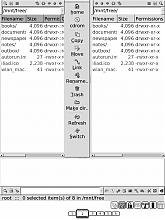 I have released a File Manager for the iLiad. It uses the 3 paned approach similar to Midnight Commander. The attached zip file will work in any directory on the the iLiad.
|
Hands-on with the E Ink-equipped Intel Metro Notebook
|
|
04:45 PM by Alexander Turcic in E-Book General | News
Still, seeing a major brand like Intel embracing E Ink technology makes my heart leap for joy. |
|
[ 4 replies ] |
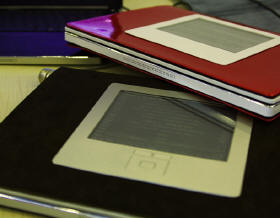 Intel showcased the
|
MobileRead offers hand formatted Sony Reader e-books (public domain)
|
|
04:43 PM by Bob Russell in E-Book Readers | Sony Reader Did you know that there is a nice collection of classic works appearing at the Sony Reader Uploads section of our forums? Some of the works already available include e-books like the original Zorro ("the Scarlet Pimpernel of California"), and from authors such as the following: * Edgar Rice Burroughs' (Tarzan collections) Feel free to take a look and download the books you are interested in. They are all manually formatted for the Sony Reader to provide a superior reading experience, likely to be much nicer than the equivalent offerings on original sources like Project Gutenberg or even the Sony Connect store. We also encourage you to contribute yourself with some not copyrighted e-books formatted for the Sony Reader. There is even a very nice tutorial to get you started. Even if you don't contribute, you may want to take a look at the tutorial to get familiar with one approach to formatting books and preparing them for the Sony Reader. We especially want to thank the newest MobileRead moderator, HarryT, who has initiated and coordinated this effort. He has seeded it with many books himself, and don't miss his great book descriptions! He also created the primary formatting tutorial, and nourishes the cooperative effort. It is exciting to see his work and the many others who are contributing significantly to this rich resource in many ways. Contributions don't just include book uploads, but additional help with determination of copyright status (to make sure posted works are in the public domain, which is not always so easy to determine), or updates to the MobileRead wiki (see e-book conversion tools or e-book file formats or Book Designer, for example.) This is an exciting beginning to a new collection of custom formatted e-books for the Sony Reader, and the community has really been delightfully helpful. We don't want to forget, however, to highlight some of the many huge efforts toward making public domain books available to all of us. And some of them even provide some form of automated conversions to Sony Reader formats. Distributed Proofreaders, Project Gutenberg, ManyBooks, Blackmask Online (now via Silk Pagoda) and others are on the front lines and bring us huge digital libraries of great works. Due to the vast numbers of books, only the cream of the crop will ever be hand formatted for specific devices, but we want to give credit to those giant shoulders on which we are standing. So if you have a Sony Reader, go check it out, grab a book, and after enjoying it maybe you'll catch the wave and add some books yourself! |
|
[ 1 reply ] |
|
Harry Potter goes digital (at least a preview of him)
|
|
04:21 PM by Alexander Turcic in E-Book General | News
The service is Flash-based and you can try it out here. Thanks to David of TeleRead for pointing out the news. |
|
[ 1 reply ] |
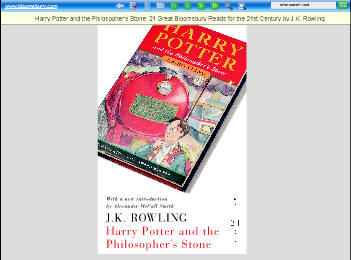 Yeah, well, it's not exactly a full digital Harry Potter, but considering Ms. Rowling's
 |
History of iRex Technologies reflects company's unique position
|
|
03:30 PM by Alexander Turcic in More E-Book Readers | iRex
It doesn't seem that any other vendors use the "Delta" chipset in their current reader devices. Now you know why the iLiad is the currently only commercial e-book reader device with a larger display, a better resolution and 16 instead of 4 levels of grey. |
|
[ 2 replies ] |
 Matthijs
  Week's Hot Topics
 Latest Polls
 Latest E-Books


 Latest Forum Activity
