Sun March 26 2006
MobileRead Week in Review: 03/19 - 03/26
|
|
07:00 AM by Alexander Turcic in Miscellaneous | Week in Review It was the week that was. Here's what MobileRead's been talking about since last Sunday: Announcements Current E-Books Trends E-Book Readers General Chat Other Gadgets Palm |
Teleread's hands-on of the iRex iLiad
|
|
06:54 AM by Alexander Turcic in More E-Book Readers | iRex
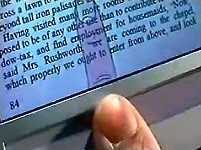
Teleread's savvy contributor Branko Collin managed to visit those folks from iRex Technologies and to get a first hands-on glimpse of the iRex iLiad, you know this e-book reader that has a crushing complement of features: 8.1" 1024x768 touch-enabled E Ink display, WiFi 802.11b, 64MB Ram + 224MB Flash, and support for PDF, XHTML, TXT, MP3. Branko discovered a few new interesting details:
Make sure to visit Teleread to see a bunch of new photos depicting the iLiad in all its beauty. Our thanks to Branko for making the trip to the iRex headquarters. |
|
[ 20 replies ] |
Sat March 25 2006
Municator - $146 Linux based "mobile" computer
|
|
04:33 PM by Bob Russell in Archive | Handhelds and Smartphones
For $146, you get: James Kendrick points out that it's "...ample for web browsing with FireFox and email using Thunderbird." More information and pictures are available at DL Mag. Availability in the US has not yet been determined. Via jkontherun.blogs.com. |
|
[ 0 replies ] |
DRM - a hot topic around the web
|
|
12:52 PM by Bob Russell in E-Book General | News
We all want to see technology advance, and for technology to enhance the availability and usability of content. Unfortunately, as with any topic involving large sums of money, there are some widely differing perspectives on what is the best set of laws and guidelines for DRM controls and fair usage of the materials. In the past, say with books in a library, there were a lot of well-accepted and legally supported ways to copy portions of a book for uses like teaching. As the cost of copying books, music and videos have been reduced, we find that content owners are nervous about giving away the shop by making their content available and then finding all their customers getting it for free. That is understandable, but DRM is not the only approach to that concern. In fact, there are even studies showing that it helps sales to allow some copying of content. And on the other side of the discussion, is usability for the consumer. In order to protect content, how far are we willing to go? Shall we track usage and put people in jail if they copy a song to put it on their iPod? And when buying a song, do you really get to keep the song to listen to , or just the right to use the one file under the exact terms allowed by the seller? And if we decide usage is controlled by the seller's terms, then the world needs to determine what kinds of "fair use" will be allowed by law. If you need to break DRM controls to save a life, is it allowed? If you buy a video, are you allowed to make a copy for a mobile device? Are you allowed to copy it for backup? Currently, the laws are heavily in favor of the content owner, and those acting in accordance with many common views of fair use are being treated as criminals. On the one hand, there are legal battles going on in congress and the courts. On the other hand, technologists are working hard to find DRM schemes that find the optimal tradeoffs between protecting content and intellectual property, and usability and welfare for the user. (Remember that copyright law was, in the first place, supposed to be a compromise of people's rights enacted to allow a reasonable return to content providers. Not for the purpose of making the content providers rich, but to maximize the welfare of society by ensuring it is worthwhile to produce books and so forth.) Much of the battle is a public relations battle for the mind of the masses. Unfortunately, the general public and even lawmakers only seem to be hearing loudly from the content owners, who seem to be aiming to "teach" people that breaking any DRM is always morally wrong, that copying a protected song is always criminal theft, and that content owners have a right to their full potential profits even if it means imposing heavily on the public. In fact, they want to not sell content, but even want to control usage, so that they can sell a limited and temporary right to view content. Usage control can, in theory, be even as intrusive as saying you can only watch a show from one location with one device at a particular hour of the day, and only once, and only if viewed before a certain date! Not to mention how a DRM-protected program, for example, can often only be used on one device, so if the device is gone the program is useless. Ultimately, the views of the public along with the lawmakers and courts will determine what sorts of fair use are considered important and reasonable. In practical terms, this will also determine how much money will be spent by consumers for the content they want (e.g. whether or not we have to pay to record a tv show), and it will determine whether or not consumers have the right to make backups or freely watch the content they buy. I don't believe that's understood yet by the general public, and hopefully the game won't be over before there is some understanding about the issues. DRM is inherently probably neither good or bad. But we do know it's generally an imposition on the public, which is the group we are supposed to be helping with copyright law. Yet, wide-scale unauthorized distribution of content is also undesireable, both for the content owners and for the public. It's that middle ground and how to handle the tradeoff for the best interest of society that creates all the complications. We can't provide all the answers here, but we can provide a forum for discussion and provide some of the latest talk around the web on the topic. So if this is a topic of interest to you, here's some of the more intriguing articles to have popped up recently. * Sun To Publish Draft For Open-Source DRM Specs * Lawrence Lessig talks about openDRM * Lessig blesses DRM * Managing Rights Management: Gates, BBC On DRM, TV * Don't Miss Cato vs. the DMCA. Copyfight: the politics of IP * USACM Policy Statement on DRM * RIAA Says Ripping CDs to Your iPod is NOT Fair Use * Sun No breaking DRM, even if it's killing you (literally!) Related story: DRM drains your battery by up to 25%. |
|
[ 9 replies ] |
Fri March 24 2006
E-book device (E Ink, 2nd-generation) comparison matrix
|
|
06:12 PM by Alexander Turcic in E-Book Readers | Which one should I buy?
Link to the overview: https://www.mobileread.com/eink/ For corrections or add-ons, feel free to post anything that comes to your mind in this thread. Also my thanks to May from Jinke for sending me his version of the device matrix. If I had to pick one of the devices based on quality of customer service, it'd certainly be a Jinke HanLin reader. |
|
[ 107 replies ] |
Credible hints that Palm Inc is planning a new generation of Linux devices
|
|
09:17 AM by cervezas in Archive | Handhelds and Smartphones
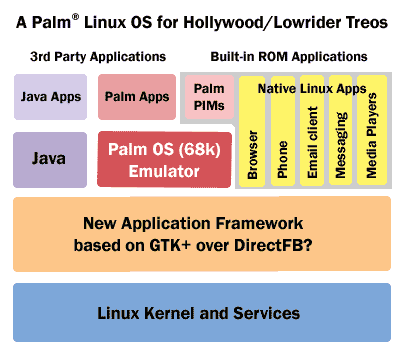
What we can say with some confidence is that Palm is quietly working with Linux behind the scenes. The hints that you'll have some kind of Linux running in the Palm of your hand are stronger and more credible than the hints we got a year and a half ago that a Windows Treo would be coming down the pike. For one thing, the anonymous sources that first informed CNET that Palm was exploring Windows Mobile (correctly as we now know) also reported that similar research was being undertaken into Linux. That leaked out in November of 2004, a month before we learned that PalmSource was acquiring China MobileSoft and charting a Linux future for the Palm OS. Was Palm getting ready for PalmSource's "Palm OS for Linux," or were they looking for other "partnerships" (CNET's word) to build their own Linux alternative? Difficult to say, and after all, these "sources" only were talking about research, not actual products. More telling are the job openings at Palm over the last 7 months (as far back as I've been watching). In September of last year Palm had openings for 17 Linux engineers on their web site. Today there are 21 positions (16 in engineering) that specifically mention Linux experience as a qualification. Most don't have Linux as prominently in the job title as they did in September, but one tantalizing job description reads in part:
"New generation"... "overall system team"... "new software platform"... it does sound unmistakably like Palm is working on their own Linux platform. The job title uses the word "handset", implying that this platform might be intended for a future Treo line, but this conclusion might be undercut by a qualification later in the posting that specifies only "handheld" device experience being a plus (implying that telephony might not be part of the plan for this platform after all). I overanalyze, but you start to get the picture. There are at least four possible interpretations I could make of this:
I discuss the last option in a little more detail here . All four possibilities are probable, but I consider the last one to be the most likely interpretation of what Palm is doing playing around with Linux in their basement. It's conservative and relatively easy but could add a lot of value to the Palm OS platform and (most critically) enable Palm OS to comply with the UMTS standard that GSM operators are using for their 3G networks. At the moment Garnet cannot do this, which is why the 700p is only slated for Sprint's EV-DO network at this time and we don't have hints about versions for Cingular or T-Mobile. |
|
[ 4 replies ] |
Palm beats the market hands down - a bright future
|
|
05:38 AM by Alexander Turcic in Archive | Handhelds and Smartphones
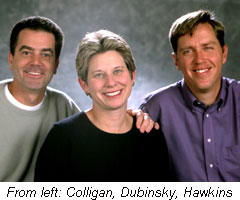
Shortly before the earnings release, the WSJ argued that Palm profited from concerns among corporate users looking for alternatives to the Blackberry wireless e-mail service during RIM's patent dispute. The article quotes Joe Beery, CIO of US Airways Group, saying that he finds the Treo more usable than the Blackberry. The decision to count the Palm smartphone as another option for the airline came after he began evaluating alternatives to the more than 300 Blackberry devices currently deployed among US Airway's top executives. According to Colligan, however, Palm's tremendous growth has "less to do with" the Blackberry patent suit. Instead he credited Palm's Microsoft-powered Treos helping boost sales. Windows Mobile "has opened doors" for Palm, in particular among potential corporate customers. According to Ontario-based market researcher Brandimensions, the Treo scores higher than the Blackberry in customer satisfaction. Some points gathered from yesterday's conference call:
Related news coverage: Disclaimer: I own Palm stock in my portfolio. |
|
[ 4 replies ] |
Thu March 23 2006
We are looking for new blood in our team!
|
|
04:29 AM by Alexander Turcic in Miscellaneous | Announcements Mobileread is looking for one or two additional editors, and we know there are shining gems in our readership somewhere. Ideally, you should have an intimidating knowledge in mobile technologies, be a prodigy with words, and have a great desire to share your opinions with others. Additionally, we are looking for somebody who can write with insight and some appropriate levity in their own distinct voice. To apply, send an e-mail with your full name in the subject line to join@mobileread.com. It'd helpful if you told us a bit about yourself, why you think you'd make the best addition to our team, and how much energy you're willing to contribute to Mobileread. |
|
[ 7 replies ] |


edit: Don't miss Branko's
The Municator from YellowSheepRiver should probably be called "portable" or "carry along" as opposed to mobile. It's not a handheld and must be plugged into a wall. But it is a very inexpensive Linux computer and you can take it with you.
As we move further and further into the digital age, all kinds of content is making the move with us. Most prominantly, this includes software, books, music and video. DRM (Digital Rights Management) is the general term for technologies that allow copies to be distributed, and yet maintain control of their usage after distribution.
We've compiled an overview of forthcoming 2nd-gen e-book reader devices that are all based on E Ink technology. They include two readers from Chinese Jinke (HanLin V2 and V8), one from Sony (Sony Portable Reader), and one from Dutch-based iRex (iLiad).
Palm has been silent about last months announcement of the ACCESS Linux Platform (ALP). But maybe that's just because the earliest time they'd be likely to release a Treo that runs on ALP would be a couple years from now. Palm isn't one to pre-announce products or roadmaps that far in the future. With PalmSource saying that ALP needs another nine months of work before it's ready to release an SDK, Palm might be biding it's time before going public with its judgment about the heir apparent to the Palm OS throne.
Palm (
Latest E-Books