


Tue January 30 2007
 Sony Reader Guide for creating optimized PDF content - Exclusive Preview Sony Reader Guide for creating optimized PDF content - Exclusive Preview
|
|
01:38 PM by Bob Russell in E-Book Readers | Sony Reader
While the instructions themselves are in a PDF, the file is not (yet) optimized for the Reader. Here, from the contents, is a list of the topics included: I. Introduction II. Creating PDFs from Word Processing Documents III. Creating PDFs from Presentations IV. Creating PDFs from Professional Layout Applications V. Doing more with Adobe® Acrobat As we look at the font recommendations, for example, we immediately see that the document can at best hope to be some general guidelines. No matter what is recommended, there will be differences of opinion because individual tastes will vary. For example, I prefer a size 16 serif font like Times Roman. But Sony states general guidelines as follows: "A range of fonts and font sizes will display clearly in PDFs on the Sony Reader. As a general starting point, we recommend using Arial and Times Roman as base fonts at sizes of 7 points. Text is legible at 6 points, though at this size it can lose some clarity. Large fonts will tend to use up screen space rather rapidly given the maximum document dimensions." The idea appears to be that one should use a smaller size in order to maximize the words on a screen as much as possible, while allowing the Sony Reader to scale the text to larger sizes when desired by the user. It will be very interesting to see how the recommendations are received when analyzed more carefully by the MobileRead community, but this is definitely a welcome addition from Sony. It is not just some casual document thrown together by novices, but is something that appears to be both informative and useful. Kudos to Sony for providing it as part of their commitment to the product. |
|
[ 51 replies ] |
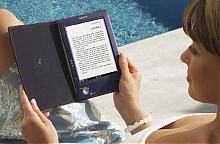 Revealed here is a pre-release version of a Sony document obtained by MobileRead. It is called "User’s Guide to Creating PDFs for the Sony® Reader", and as expected, the information contained covers how to prepare PDF documents that are optimized for the Sony Reader. We expect a similar version to be officially released from Sony in the near future.
 Mon January 29 2007
|
Adobe wants PDF to become the formally recognized standard
|
|
04:46 AM by Alexander Turcic in E-Book General | News
Before you get too excited (or not) about yet another proposed document standard (heck, if you want to believe Adobe, PDF is already the standard), keep in mind that it can take anywhere from 12-30 months for a proposed standard to be ratified. [via Adobe Blogs] |
|
[ 4 replies ] |
 In a
In a Sun January 28 2007
Sat January 27 2007
|
Is voice control part of our mobile future?
|
|
04:16 PM by Bob Russell in Archive | Handhelds and Smartphones
But with more realistic goals, speech input might have a place in our mobile future after all. Those who have used the newer versions of Dragon Naturally Speaking, for example, will have an idea of how far such programs have come. You can actually speak text and it will be recognized. Years ago, I played around with state of the art software, and it just wasn't worth using. Now it is. With devices like the new UMPCs, we are finding that powerful devices are coming in smaller and smaller packages for computing on the go. Together with progress in voice recognition software, it is becoming evident that you might be able to control a mobile device with speech after all. For an example of what I mean, take a look at this video demo of speech control of a Vista system. You can both see that it's not perfect, and that it has great potential. And apparently it's much better than what was included in early versions of Vista. Of special interest for mobile computing is the later portions of the video with web browsing using voice commands. And don't forget that it doesn't have to be entirely voice controlled to be useful. We are happy to use both the D-pad control and a fingernail when using a Treo, so why not do a combination of voice and other inputs for mobile computing also? After all, you aren't always in a location where you can speak freely anyway, such as in a theater or library. Speech control may not be like the movies in our lifetime, but it just might become a useful supplementary input method for many people in the next few years. And what voice recognition application could be easier than e-book reading? Surely any software can learn to recognize a "turn page" command! |
|
[ 10 replies ] |
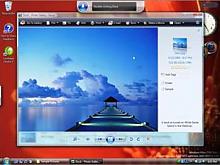 Voice recognition and control systems were frequently mentioned as the computer input of the future. It was supposed to replace keyboard input, and even was going to provide all your home controls for lights and appliances. But then we learned how hard the problem is, and how much of human listening is tied to our understanding of language and contextual information.
|
More mobile sites at Wap Review
|
|
03:55 PM by Bob Russell in Archive | Mobile Sites
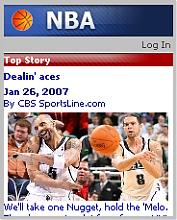
The latest installment includes a new CBS Sportsline site which has "a new and very attractive site design. The old site was text only, the new one has images resized to browser widths and flashy image gradients. Content's not bad either." Check out some more mobile sites in their latest post at next installment. |
|
[ 0 replies ] |
|
iSilo launched for Symbian S60 3rd Edition devices
|
|
01:31 PM by Alexander Turcic in E-Book Software | Reading and Management
Click here to download iSilo V4.33 beta for Symbian S30. |
|
[ 3 replies ] |
 It's been a while since we heard from Darren, mastermind behind the e-book reading program
 |
New mobile chip technology reduces power requirements up to 80%
|
|
10:33 AM by Bob Russell in Archive | Handhelds and Smartphones "Intel Corp. and IBM have announced one of the biggest advances in transistors in four decades, overcoming a frustrating obstacle by ensuring microchips can get even smaller and more powerful." Intel will be in mass production with the new technology by the second half of 2007. IBM will take until 2008, but they will be integrating it into it's next generation of even more densely packed transisters. This breakthrough news has the potential for greatly reduced power consumption for mobile devices. The new chips will use an exotic silvery metal called "hafnium" which will replace silicon layers. Power leakage caused by the increasingly tiny layer of silicon in the part of transisters called a "gate", was the single biggest potential barrier to the continuation of Moore's Law. "The problem with the previous technology is that the layer of silicon-based material is now just 5 atoms thick, meaning lots of electricity leaks out, resulting in wasted power and shorter battery life." That meant that even smaller transisters might not be possible without another breakthrough. Fortunately, that obstacle is now gone. So for mobile device consumers, it turns out that the new technology is not only the first major materials change in chip manufacturing in decades, but it is also expected to be capable of reducing power consumption by up to 80%. However, I wouldn't count on this advance alone being able to give us UMPC devices with 14hr battery life next year. While the display and wireless capabilites may be getting more efficient, they still use quite a bit of juice themselves. |
|
[ 0 replies ] |
Thu January 25 2007
|
Microsoft will provide more years of support for Windows XP
|
|
05:06 PM by Bob Russell in Miscellaneous | Lounge
It looks to me like if you have XP Home Edition, you might find you only have 2 years of support after Vista is released, but it's hard to tell. If you have XP Tablet 2005, then you appear to have 2 years mainstream support plus another 5 years of extended support. According to PC Pro the dates might even extend further than that, and will include security updates. At any rate, that's good news for those who are looking for deals on new computers during the transition to Vista. And it also gives some comfort to UMPC fans who want to buy a device right away, before Vista is available on them. Via DownloadSquad. |
|
[ 0 replies ] |
 Microsoft
  Week's Hot Topics
 Latest Polls
 Latest E-Books


 Latest Forum Activity
