


Fri September 14 2007
 Hot off the press: iRex iLiad V2 available Hot off the press: iRex iLiad V2 available
|
|
05:38 AM by Hadrien in More E-Book Readers | iRex
I just received a press release this morning (in french), and here're the key features:
2 images included, there's 3 more that I can't upload because of the 1 Mb limit. |
|
[ 62 replies ] |
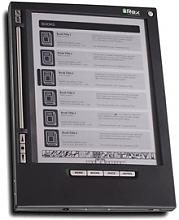 If you were wondering why there's no iLiad in stock currently, here's the answer: iRex is releasing an updated version of the iLiad.
Thu September 13 2007
|
ETI (makers of the EB1100) may indeed be working on an E Ink device!
|
|
09:51 PM by NatCh in E-Book General | News
If you're wondering why there are no specs included, it's because there are none provided by ETI at the present time, but don't take my word for it, see for yourself. As you can see, it looks an awful lot like the STAReBOOK, and presumably the Cybook3 (since those devices share roughly the same hardware). There isn't a lot of detail given on it, though it's probably also safe to assume similar hardware capabilities. I think the real news here is that ETI is looking at making an e-ink device at all. The EB1100 and its various half-siblings are so beloved by those who use them, that it should be very interesting to see what sort of functional features ETI puts in the accompanying software for the device. So, what does this do to the e-ink race? |
|
[ 12 replies ] |
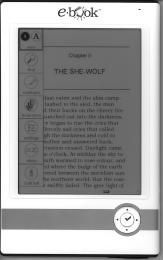 It's been
 |
Kindle Launch at Frankfurt Book Fair?
|
|
10:02 AM by Nate the great in E-Book Readers | Amazon Kindle
Technology blog Engadget said: "From the sound of it, publishing execs are pinning quite a bit of hope on Amazon and its device, with one even going so far as to [say] that 'if these guys can't make it work, I see no hope'." HarperCollins UK c.e.o. Victoria Barnsley is among the publishers to have seen a prototype Kindle. She told the London Book Fair in April that she had seen the Amazon reader and was "rather impressed" with the device. An Amazon spokesman refused to comment, saying that recent reports were "rumour and speculation". from: ----------- |
|
[ 67 replies ] |
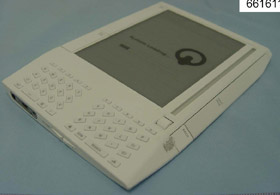 Speculation is mounting that Amazon will unveil its long awaited "Kindle" e-book reader at the Frankfurt Book Fair. The device is reportedly equipped with a wireless modem allowing users to browse the internet without connecting directly to a computer. It is also reported to have a small keyboard allowing for internet navigation as well as a scroll wheel to help users flick through text.
|
Why Adobe may be good for the new ePub standard e-book format
|
|
08:49 AM by Bob Russell in E-Book General | News As recently announced, ePub is the newly approved IDPF e-book standard for publishers and consumers. It includes a zip-based container format for all the relevant files (probably most important for publishers), and it includes a reflowable XHTML format for the actual book contents. One of the questions that needs to be asked is what the presence of Adobe and Digital Editions will mean to the standard. Is Adobe likely to support it in a manner that adds value, or will we see it consistently subvert the standard? Fortunately, all signs seem to point to Adobe being a solid supporter. They have been a team member with the IDPF, and comments on Bill McCoy's blog have generally given the impression that Bill is not only an advocate of a common reflowable standard, but that he wants this one to succeed. (By the way, Bill McCoy is General Manager, ePublishing Business, Adobe Systems Incorporated, so his opinions do matter.) But we have seen a lot of rhetoric from companies about how they support open standards who don't really end up helping the standard at all. There are other companies, content related companies especially, who even shun standards. Remember the way digital Sony music players wouldn't even support MP3 until recently? They pushed the more expensive Memory Stick on us, when everyone else was using SD or CF. But it's hard to completely shun standards and win customers at the same time. Recently, we see them becoming much more of a good community member with support for things like MP3 and SD cards in the Sony Reader, for example. Apple may be going the opposite direction. We hear constantly about anti-competitive moves and moves against interoperability, yet they seem to get a free pass. Microsoft has a reputation for adopting and then extending/distorting and then destroying standards. But if you think about it, Adobe is one of the few significant players in the content game that has actually "walked the walk". Look how widespread and the PDF format is, and how Adobe seems to not sabotage others who want to use it or create tools for it without an Adobe partnership. And look at what a huge benefit it has been for non-reflowable page layout type content. They manage to make money with it, but everyone wins and you see all kinds of PDF tools and content everywhere. I don't want to minimize the contribution of other players in the potential success of the ePub standard, but one cannot help but focus on Adobe right now early in the game. EPub is aiming to be a popular standard on both the e-book publishing and consuming sides, and with Adobe's Digital Edition and other support, ePub might just have a real shot. Adobe appears to be willing to support the standard without trying to kill it, and so while everyone else is talking about being good for standards and the general community, we have seen Adobe actually live it. Let us know what you think. Is this a naive look at Adobe and ePub, or is ePub a big step forward for reflowable content with a true Adobe supporter? |
|
[ 51 replies ] |
Wed September 12 2007
|
Amazon Kindle likely launch date: October 15!
|
|
08:13 PM by Alexander Turcic in E-Book Readers | Amazon Kindle
Link: Les Echos article In perfect Babelfish English:
Wow. Amazon is going to launch its own e-paper store hosting e-paper newspapers? Could there be a better time to celebrate the launch of a new wireless e-book reader...? |
|
[ 66 replies ] |
|
How Mobipocket DRM can drive away customers
|
|
07:48 PM by Alexander Turcic in E-Book General | News
Want to know what happened when James clicked the button? Read the rest of his story! Related: MobiPocket Shut Down!? |
|
[ 34 replies ] |
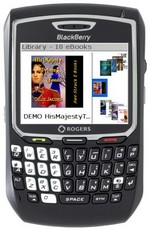 For some, DRM stands for Down-Right Maddening. Poor James Kendrick, who had a less than glorious day trying to reauthorize his BlackBerry with Mobipocket's DRM server.
|
French daily Les Echos for iLiad and STAReBook users
|
|
07:27 PM by Alexander Turcic in More E-Book Readers | iRex
Les Echos estimates 1'000 to 1'500 e-paper subscribers by the end of the year. Pricelist:
Noteworthy links:
|
|
[ 5 replies ] |
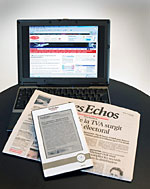 It's been a long time coming, but the French daily newspaper Les Echos has finally launched its e-paper edition for the iRex iLiad and the STAReBook e-reader.
 |
TBS to debut cell phone web site for e-books
|
|
06:13 AM by grimo1re in E-Book General | News
TOKYO (Nikkei)--Tokyo Broadcasting System Inc. (9401) will introduce a cellular phone Internet site that sells electronic books related to its television programs, The Nikkei learned Tuesday. The Web site will be operated with Words Gear Co., an e-books joint venture between Matsushita Electric Industrial Co. (6752) and others. The site will debut Wednesday on the Softbank Mobile Corp. network and on KDDI Corp.'s (9433) au service on Thursday. NTT DoCoMo Inc. (9437) users will have access from Sept. 18. Initially, the site will market content developed by TBS that will be tied in with six popular TBS shows, including novels by guests appearing on a variety program, as well as photo compilations from its world heritage series. To increase awareness of the site, TBS will run ads during and after broadcasts. By attracting customers with scripts from dramas and other offerings, TBS hopes to trigger sales of best-sellers and comics. The broadcaster aims to offer around 100 titles. To purchase the books, users will be required to become members. With three monthly membership options of 315 yen, 525 yen and 1,050 yen, subscribers will be awarded the corresponding number in points, which can be used to purchase the e-books. Most content will cost the equivalent of around 100-300 yen, with users able to buy additional points. Fees will be collected by cell phone service providers together with calling costs. The broadcaster anticipates 20,000 users in the first year. (The Nikkei Wednesday morning edition) http://www.nni.nikkei.co.jp/AC/TNKS/...11D11JFN03.htm (paywall) |
|
[ 7 replies ] |
 TBS To Debut Cell Phone Web Site For Electronic Books
  Week's Hot Topics
 Latest Polls
 Latest E-Books


 Latest Forum Activity
